Best Billing Software with Loyalty & Customer Management Features
Build stronger repeat-customer relationships with profiles, purchase history, Udhaar tracking and faster billing
Retail growth does not come only from finding new customers. It also comes from serving existing customers well enough that they return, recommend the shop and trust the business with their next purchase. Yet many small retailers still write customer names and phone numbers on loose paper slips, store credit in a notebook and issue bills without saving useful customer context.
Try Elite Billing — Just ₹399 Per Year
Affordable billing software for growing businesses.
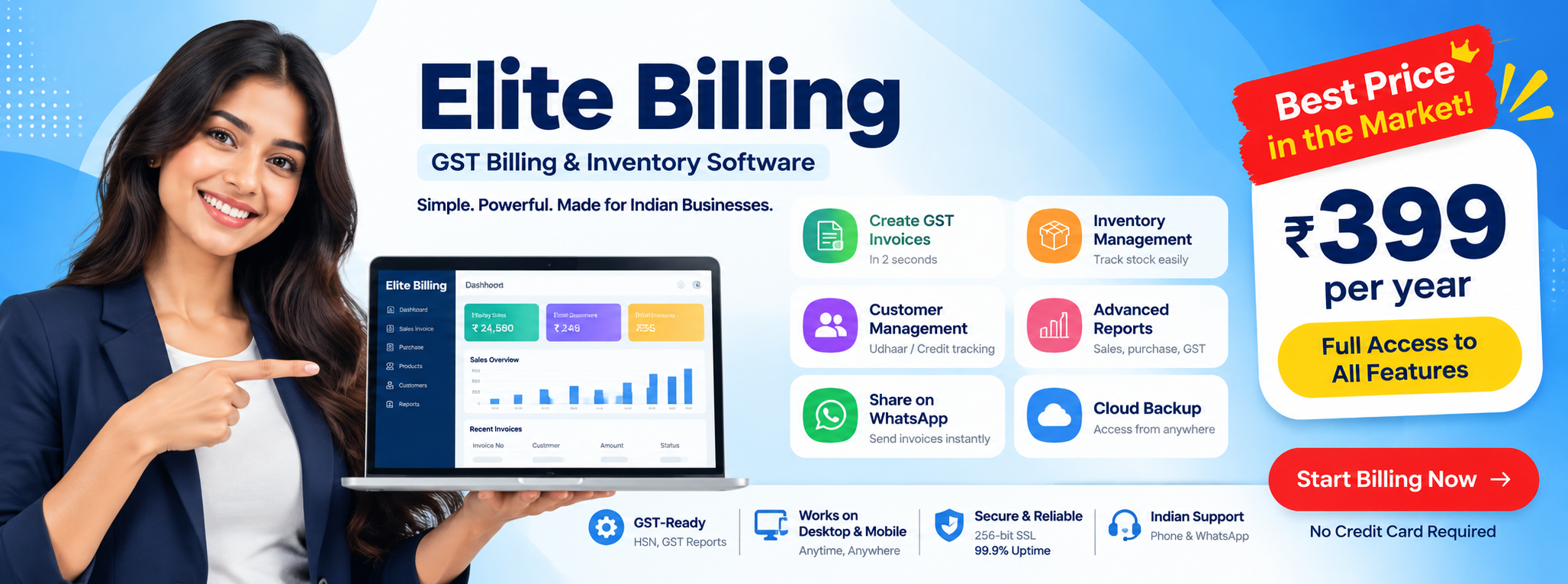
That is why businesses search for billing software with a loyalty program. They want more than a receipt printer. They want a customer database connected to billing, a clear purchase history, transparent credit tracking and reports that help the owner understand repeat buying behaviour. Elite Billing supports this customer-management foundation alongside GST invoices, barcode billing, inventory, expenses, suppliers and cloud access.
Elite Billing combines customer profiles, invoice history, credit visibility and reporting with loyalty and reward tracking. This means a retailer can connect a purchase to the customer relationship, recognize repeat buyers and manage a more consistent retention process from the same billing workflow.
Turn every bill into a better customer relationship
Subscribe to Elite Billing and start organizing customer records, repeat sales, stock and Udhaar from one connected billing workflow.
Start Free with Elite BillingBook a Free DemoWhy customer retention matters more than ever for retailers
Existing customers already know the store, the product quality and the people serving them. When the experience is convenient and trustworthy, they are more likely to return for routine purchases. A retailer who recognizes a regular customer, remembers the right product category and handles credit clearly can create a stronger relationship than a business that treats every visit as an anonymous transaction.
Modern shoppers also expect speed. They do not want to repeat the same phone number or explain previous purchases every time. They expect accurate bills, quick checkout and clear answers about availability. A digital billing system can make these small moments more consistent without asking the owner to memorize every customer.
Retention is not only about discounts. It can include:
- Recognizing regular customers at checkout.
- Finding past invoices when a customer asks about a purchase.
- Keeping customer credit or Udhaar transparent.
- Recommending products based on a known purchase pattern.
- Maintaining stock of items frequently requested by repeat buyers.
- Following up professionally when a payment is pending.
- Giving the customer a clear and consistent invoice every time.
Good billing software makes these activities easier because customer information is captured during work the business is already doing—creating invoices.
Core customer tracking features to look for
1. A centralized customer database
A small business needs one dependable place for customer names, phone numbers, addresses, notes and transaction history. The database should be easy for staff to search while creating a bill. It should also help the owner distinguish between similar names and avoid creating duplicate records.
When customer details are connected to invoices, the business can answer questions quickly. What did this customer buy previously? When was the last invoice? Is any payment pending? Which products are commonly purchased together? The answers support better service and better operational decisions.
2. Purchase history insights
Purchase history is not a replacement for a specialist marketing automation platform, but it is a valuable business signal. A shop can identify regular buyers, review repeat products and understand which categories bring customers back. A clothing retailer may notice a customer who repeatedly purchases a particular style. A mobile shop may need to find an earlier invoice for warranty or accessory support. A supermarket may use frequent product movement to improve purchasing decisions.
History is useful only when the underlying bills are accurate. Staff should select the correct customer record, use clear product names and complete payment information consistently.
3. Transparent credit or Udhaar management
Credit sales can strengthen a long-term customer relationship when both sides understand the balance. They become risky when the amount is written in an unclear ledger or remembered differently by the customer and the shop owner. A GST billing software for repeat customers should link the invoice to the customer record and make pending amounts easier to review.
Clear Udhaar tracking helps the business follow up without confrontation. The owner can review the date, invoice, amount and payment status before speaking to the customer. Recording payments promptly also prevents the customer history from becoming misleading.
4. Fast barcode billing
Loyal customers value recognition, but they also value speed. A regular customer should not have to wait because the cashier searches for every product manually. Barcode billing helps staff locate mapped products faster and reduce entry mistakes. When barcode billing is connected to inventory and customer records, the business can provide a smoother experience without sacrificing operational control.
How Elite Billing supports customer retention workflows
Customer profiles during billing
Elite Billing lets a business maintain customer details as part of its sales workflow. The owner can create or select a customer while preparing the invoice, making it easier to build a useful history over time. This is more reliable than collecting customer information only during a special promotion or after a payment problem occurs.
Invoice history for faster service
When an existing customer returns, staff can review previous transaction information where needed. This supports repeat purchases, customer questions and service follow-up. It also helps the owner understand whether a customer relationship is active, occasional or credit-based.
Credit visibility that supports trust
Customer and Udhaar records should be transparent for both the business and the buyer. Elite Billing’s customer and invoice workflows help the owner maintain a clearer view of pending amounts, while payment follow-up tools support more systematic collection work.
Reports for business decisions
Reports help the owner move from assumptions to evidence. Sales, product and customer-related information can guide stock decisions, repeat-customer conversations and review of outstanding credit. GST and business reports can also be shared with an accountant as part of the regular accounting workflow.
Cloud access for owners on the move
A retail owner may not always be at the counter. Cloud-connected access across supported mobile and desktop devices makes it easier to review customer information, sales activity and business reports while visiting suppliers, managing another location or travelling.
Subscribe to a customer-first billing system
Give your team one place for customer profiles, invoices, stock and payment follow-up. Start with Elite Billing today.
Subscribe and Start FreeView Live DemoHow customer management can increase repeat sales
Customer tracking does not automatically create loyalty. It gives the business better information and a more consistent process. The owner still needs to provide good products, fair service and relevant communication. But a connected billing system removes several common points of friction.
Recognize regular buyers
When a customer profile is available at the counter, staff can greet regular buyers correctly and find their history without asking the same questions again. Small moments of recognition can make a local shop feel more personal.
Stock what customers actually request
Product movement and customer history help the owner see which items are important to the local customer base. Better purchasing decisions reduce the chance that repeat buyers leave because their usual product is unavailable.
Make credit conversations clearer
Udhaar tracking gives the owner a factual basis for payment discussions. It also protects the relationship because the customer can see the transaction history rather than receiving an unclear reminder based on memory.
Offer more relevant recommendations
Purchase history can help staff suggest related products or remind customers about a commonly repeated purchase. Recommendations should be helpful and relevant, not intrusive. The purpose of tracking is better service, not unnecessary pressure.
Measure what is working
Review sales reports, repeat transactions and payment patterns over time. If a shop introduces a customer-retention process, reports can help the owner compare activity before and after the change. Avoid assuming that every increase comes from one feature; seasonality, location, pricing and stock also affect retail performance.
How loyalty rewards and customer management work together
A loyalty program is strongest when it is connected to accurate billing. Customer profiles identify the buyer, purchase history shows the relationship, and reward tracking gives the business a structured way to recognize repeat activity. Credit tracking, stock visibility and reports then help the owner manage the commercial side of the relationship.
A points or reward offer cannot fix duplicate customer records, inaccurate invoices or unclear Udhaar. Elite Billing brings these foundations together so the loyalty workflow is based on real customer transactions rather than disconnected paper records.
When comparing a POS billing software with customer loyalty, ask the provider:
- Does it store customer details at the time of billing?
- Can staff find a customer’s purchase history?
- Can it track credit sales and payments clearly?
- Does it support barcode billing and stock updates?
- Are reports available for customer and business review?
- Can it record and track loyalty points, rewards or retention offers?
- Can the owner access the information securely from supported devices?
This checklist ensures the loyalty program is connected to the real retail workflow instead of existing as a separate promotional tool with no reliable transaction history.
Other features that strengthen the retention workflow
GST-ready invoicing
Professional GST invoices make repeat transactions easier to understand and give customers a dependable record. Clear documents support trust and make the business appear more organized.
Inventory and low-stock visibility
Repeat customers are more likely to return when their regular products are available. Connected sales and purchase workflows help owners monitor stock and plan replenishment.
Supplier management
Supplier records and purchase history help the owner maintain the supply side of the business. Better supply visibility supports consistent availability for customers.
Expenses and reports
Retention efforts should make commercial sense. Expense tracking and reports help the owner understand whether discounts, extra service time or credit terms fit the business’s cash flow.
Multi-user access
Owners, cashiers and managers can work with the same customer records while receiving access suited to their responsibilities. This reduces the risk of customer information staying with one person or one device.
A practical customer-retention workflow for a small retailer
- Set up clean products: Add product names, prices, tax details and barcode values carefully.
- Capture customer details naturally: Create or select the customer during billing when a record is useful.
- Complete the invoice accurately: Confirm products, quantities, tax and payment status.
- Review customer history: Use previous transactions to answer questions and improve service.
- Track Udhaar promptly: Record credit sales and payments so balances remain transparent.
- Review product movement: Keep frequently purchased items available.
- Use reports: Review sales, expenses, stock and pending dues with the owner or accountant.
- Choose retention actions: Personal service, useful recommendations or a separately managed reward offer should follow the customer insight.
This process is simple enough for a small shop but structured enough to support growth. Because loyalty and reward tracking are connected to the customer and billing workflow, the owner can manage retention without maintaining a separate manual rewards register.
Frequently Asked Questions
Can I save customer phone numbers and purchase history during billing?
Yes. Elite Billing supports customer records and invoice history so businesses can maintain customer details and review previous transactions as part of the billing workflow.
How does billing software help manage customer credit or Udhaar?
Customer records, invoice history and payment follow-up workflows help businesses see outstanding dues and maintain clearer credit-sale records instead of relying on paper ledgers.
Can I access my customer database from my mobile phone?
Elite Billing is designed for cloud-connected access across supported mobile and desktop devices, allowing authorized users to review customer and business information away from the counter.
Does Elite Billing include an automated points or rewards program?
Yes. Elite Billing supports loyalty and reward tracking alongside customer profiles, purchase history and billing records, helping businesses recognize repeat customers and manage retention offers.
How does tracking regular customers increase retail revenue?
Tracking helps a business recognize regular buyers, understand purchase history, maintain product availability and follow credit more clearly. It supports better retention decisions, but no software feature guarantees a specific revenue increase.
Conclusion: loyalty starts with organized customer data
Customer loyalty is built through repeated positive experiences. Fast billing, accurate invoices, available products, clear Udhaar and helpful service all contribute. A billing system with customer management makes these experiences easier to deliver consistently because the business no longer loses useful information between transactions.
Elite Billing gives retailers and small businesses a practical foundation for customer retention through customer profiles, invoice history, credit tracking, barcode billing, inventory, GST reports, multi-user access and cloud availability. Book a free live demo to see how it fits your customer-management workflow.